
- Home
- Artists & Makers
- Bremon
Bremon
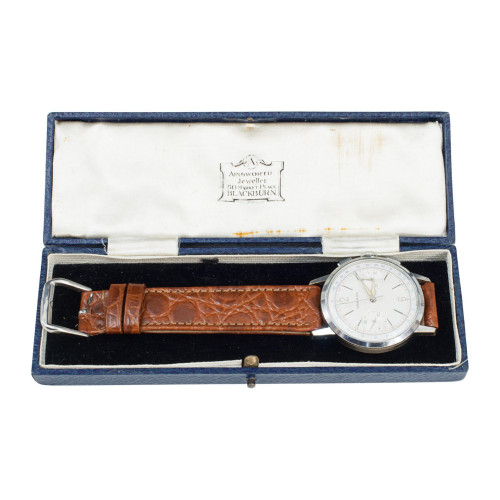
The history of "Bremon" fits into what is often called the golden age of Swiss watchmaking, before the Quartz Crisis, when many smaller brands operated successfully by sharing components and expertise. It is important to note that this brand is unrelated to Bremont, which is a modern company founded in 2002. Instead, Bremon appears to have been a typical mid-20th-century private label brand, part of a decentralized system that defined the Swiss watch industry at the time.
During the 1950s to 1970s, brands like Bremon did not usually manufacture their own movements or cases. Instead, they acted more like coordinators, sourcing high-quality movements from specialist manufacturers such as Valjoux or Landeron, while cases and other components were produced by separate suppliers. The brand would then design the dial and assemble the final watch under its own name. Because of this, watches like Bremon often contained the same internal components used by more famous companies such as Breitling or Heuer, meaning they could offer comparable performance despite being less well known.
There is also a strong indication that these watches were sold in the British market, particularly through independent jewellers. In the 1960s, many smaller Swiss brands relied on export markets, and the UK was especially important. Local jewellers often stocked these boutique brands because they provided reliable Swiss quality at a lower cost than major names like Omega or Rolex. This made them appealing to customers who wanted a well-made watch without paying for a luxury brand name.
In recent years, there has
The history of "Bremon" fits into what is often called the golden age of Swiss watchmaking, before the Quartz Crisis, when many smaller brands operated successfully by sharing components and expertise. It is important to note that this brand is unrelated to Bremont, which is a modern company founded in 2002. Instead, Bremon appears to have been a typical mid-20th-century private label brand, part of a decentralized system that defined the Swiss watch industry at the time.
During the 1950s to 1970s, brands like Bremon did not usually manufacture their own movements or cases. Instead, they acted more like coordinators, sourcing high-quality movements from specialist manufacturers such as Valjoux or Landeron, while cases and other components were produced by separate suppliers. The brand would then design the dial and assemble the final watch under its own name. Because of this, watches like Bremon often contained the same internal components used by more famous companies such as Breitling or Heuer, meaning they could offer comparable performance despite being less well known.
There is also a strong indication that these watches were sold in the British market, particularly through independent jewellers. In the 1960s, many smaller Swiss brands relied on export markets, and the UK was especially important. Local jewellers often stocked these boutique brands because they provided reliable Swiss quality at a lower cost than major names like Omega or Rolex. This made them appealing to customers who wanted a well-made watch without paying for a luxury brand name.
In recent years, there has
been renewed interest in these smaller, lesser-known brands. Collectors have begun to appreciate that the real value often lies in the movement, with many Bremon watches likely using respected calibres such as those produced by Valjoux, known for their durability and ease of servicing. At the same time, the clean and functional design typical of the 1960s, such as simple dials, tachymeter scales, and pump pushers, has become increasingly desirable.
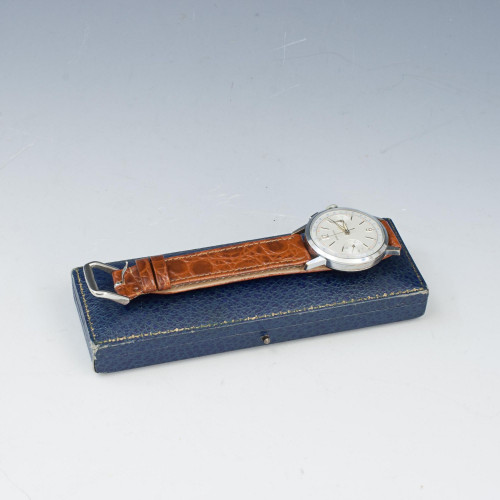
Overall, Bremon watches were most likely produced in Switzerland in the late 1960s and exported to the UK, where it would have been sold by a local jeweller as a reliable, high-quality timepiece. It may have been worn regularly for many years before surviving the shift to quartz and digital watches, a period when many mechanical watches were discarded. Today, it represents both a piece of that earlier era of watchmaking and a style that has come back into appreciation among collectors.
1 ITEM
Please create wishlist to add this item to
