
- Home
- Artists & Makers
- Sampson Mordan & Co.
Sampson Mordan & Co.
1770 - 1843
Sampson Mordan (1770-1843), an apprentice and later assistant to the celebrated mechanic John Bramah, established his own business in 1815, laying the foundations for one of Britain's most innovative manufacturers of precision silverware and mechanical novelties. Mordan was a prolific inventor, and in 1822 he secured the first patent for a metal propelling pencil, featuring an internal mechanism that advanced the graphite lead during use. This groundbreaking invention was co-patented with John Isaac Hawkins.
In 1823, Mordan purchased Hawkins' share of the patent and registered his first maker's mark as a smallworker at the London Assay Office on 9 June of that year (SM in an oblong punch). The following year, in 1824, he entered into partnership with Gabriel Riddle, registering a new joint mark (SM·GR). This partnership continued until 1836, after which Mordan carried on the business independently under the name S. Mordan & Co.
Following Sampson Mordan's death in 1843, the firm passed to his sons Sampson (Junior) and Augustus Mordan. Over time, the business expanded further with the addition of partners Edmund George Johnson and Zachariah Watkins, the latter retiring in 1879. After the death of Sampson Mordan (Jr), his share was inherited by Augustus, who was later joined in 1890 by Harry Lambert Symonds. In 1898, the firm was formally incorporated as S. Mordan & Co. Ltd, reflecting its established reputation and scale of operations.
Throughout the 19th century, the company was at the forefront of mechanical innovation, securing over 160 patents for various propelling pencil mechanisms between the
Sampson Mordan (1770-1843), an apprentice and later assistant to the celebrated mechanic John Bramah, established his own business in 1815, laying the foundations for one of Britain's most innovative manufacturers of precision silverware and mechanical novelties. Mordan was a prolific inventor, and in 1822 he secured the first patent for a metal propelling pencil, featuring an internal mechanism that advanced the graphite lead during use. This groundbreaking invention was co-patented with John Isaac Hawkins.
In 1823, Mordan purchased Hawkins' share of the patent and registered his first maker's mark as a smallworker at the London Assay Office on 9 June of that year (SM in an oblong punch). The following year, in 1824, he entered into partnership with Gabriel Riddle, registering a new joint mark (SM·GR). This partnership continued until 1836, after which Mordan carried on the business independently under the name S. Mordan & Co.
Following Sampson Mordan's death in 1843, the firm passed to his sons Sampson (Junior) and Augustus Mordan. Over time, the business expanded further with the addition of partners Edmund George Johnson and Zachariah Watkins, the latter retiring in 1879. After the death of Sampson Mordan (Jr), his share was inherited by Augustus, who was later joined in 1890 by Harry Lambert Symonds. In 1898, the firm was formally incorporated as S. Mordan & Co. Ltd, reflecting its established reputation and scale of operations.
Throughout the 19th century, the company was at the forefront of mechanical innovation, securing over 160 patents for various propelling pencil mechanisms between the
1820s and 1870s. Notable developments included the first spring-loaded mechanical pencil patented in 1877, followed by the introduction of a twist-feed mechanism in 1895.
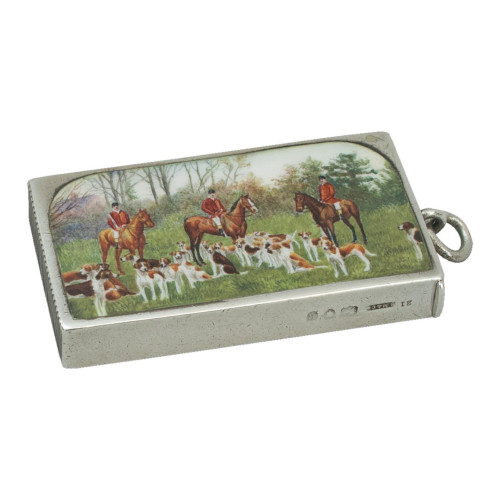
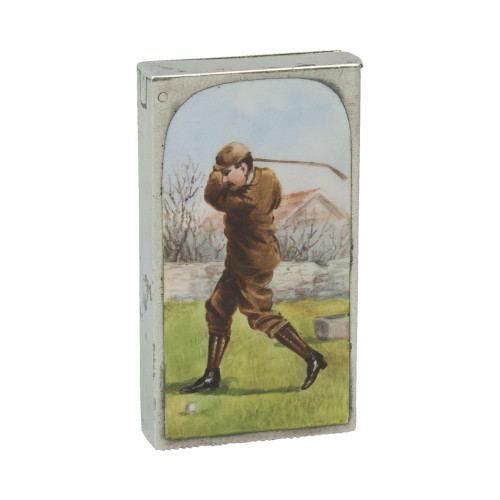
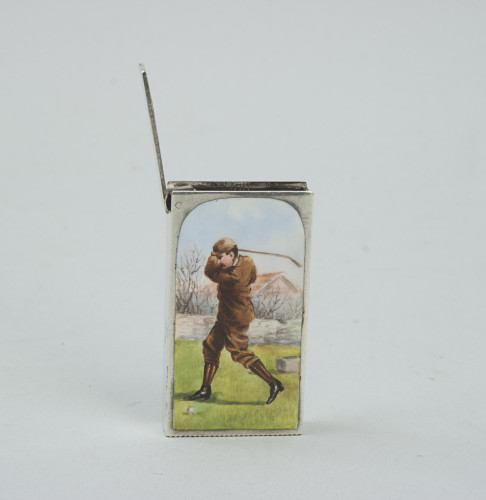
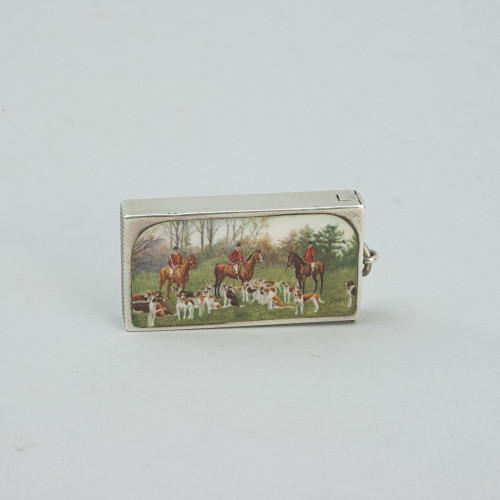
Alongside its celebrated pencil production, S. Mordan & Co. maintained an extensive output of small silver and gold items, particularly the finely crafted "novelties" that were immensely popular in the late Victorian and Edwardian periods. These included vesta cases, scent bottles, and other gentleman's accessories, many of which were supplied to prestigious retailers such as Asprey & Sons and the Goldsmiths & Silversmiths Company Ltd.
The firm's prominence was further underlined by its participation in major exhibitions, including the Great Exhibition of London in 1851, as well as the British Industries Fairs of 1922 and 1929. Despite its long and distinguished history, the company faced decline in the 20th century. In 1933, distribution rights for its propelling pencil business were transferred to L. G. Sloan Ltd, and following the destruction of the factory during enemy bombing in 1941, the firm's patents were sold to Edward Baker. S. Mordan & Co. ultimately entered voluntary liquidation in 1952, bringing to a close more than a century of innovation and craftsmanship.
Adapted from www.silvercollection.it
2 ITEMS
Please create wishlist to add this item to
