
- Home
- Artists & Makers
- Silvertown Company
Silvertown Company
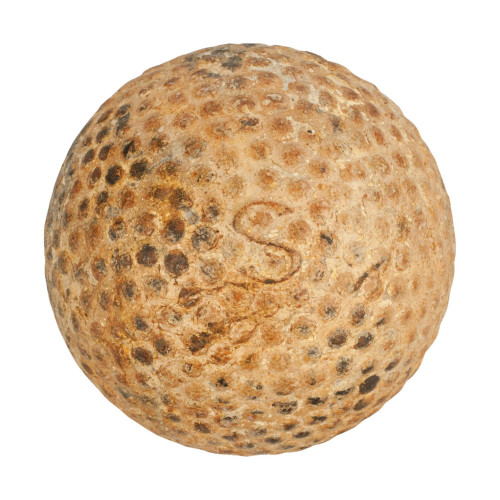
1864 - 1960
The Silvertown Company, originally the India Rubber, Gutta Percha and Telegraph Works Company, was founded in 1864 by Hugh Adams Silver. Over its long history it was known by several names, including the British Tyre & Rubber Co. and later the Silvertown Rubber Co..
The Silvertown works were initially dedicated to submarine telegraph cables, but from the late 19th century the company diversified into new products such as tyres and golf balls. By the 1880s it was firmly established in the sporting market, producing gutta-percha golf balls that quickly gained a reputation for quality.
A key figure in the company's research was Dr. Rollo Appleyard, a respected scientist who guided technical innovation at Silvertown. One of his protégés was Albert Ernest Penfold (1884-1941), who would become the most important figure in British golf ball manufacture in the 20th century.
In 1911, Penfold was placed in charge of golf ball development at Silvertown. Drawing on his scientific training, he brought a fresh approach to design and materials. In 1912 he secured patents for distinctive surface patterns: a "mesh" pattern, which he assigned to Silvertown, and a "lattice" pattern, which he retained under his own rights. This decision would later prove crucial in the creation of the independent Penfold brand.
Penfold's designs marked a turning point in golf ball technology. His patterned covers improved flight stability and distance, rivalling American innovations and giving British manufacturers an edge in the growing international market.
After leaving Silvertown in 1919 to join Dunlop, Penfold went on to found Golf Ball
The Silvertown Company, originally the India Rubber, Gutta Percha and Telegraph Works Company, was founded in 1864 by Hugh Adams Silver. Over its long history it was known by several names, including the British Tyre & Rubber Co. and later the Silvertown Rubber Co..
The Silvertown works were initially dedicated to submarine telegraph cables, but from the late 19th century the company diversified into new products such as tyres and golf balls. By the 1880s it was firmly established in the sporting market, producing gutta-percha golf balls that quickly gained a reputation for quality.
A key figure in the company's research was Dr. Rollo Appleyard, a respected scientist who guided technical innovation at Silvertown. One of his protégés was Albert Ernest Penfold (1884-1941), who would become the most important figure in British golf ball manufacture in the 20th century.
In 1911, Penfold was placed in charge of golf ball development at Silvertown. Drawing on his scientific training, he brought a fresh approach to design and materials. In 1912 he secured patents for distinctive surface patterns: a "mesh" pattern, which he assigned to Silvertown, and a "lattice" pattern, which he retained under his own rights. This decision would later prove crucial in the creation of the independent Penfold brand.
Penfold's designs marked a turning point in golf ball technology. His patterned covers improved flight stability and distance, rivalling American innovations and giving British manufacturers an edge in the growing international market.
After leaving Silvertown in 1919 to join Dunlop, Penfold went on to found Golf Ball
Developments Ltd. in 1927. He successfully defended his lattice patent in a 1931 court case against Dunlop, underlining his role as both inventor and entrepreneur. His company's "Penfold" balls would go on to become iconic, endorsed by professionals and remembered as symbols of British golfing excellence.
Silvertown itself continued to evolve. In 1955 it became the Silvertown Rubber Co., a subsidiary of the British Tyre & Rubber Co., before its eventual decline and closure in the 1960s. At its height, however, the Silvertown works had employed thousands and stood as a powerhouse of British industrial innovation.
1 ITEM
Please create wishlist to add this item to
