
- Home
- Artists & Makers
- W. Insall & Sons
W. Insall & Sons
1829
W. Insall & Sons, Bristol, 19 & 20 St. Augustine's Parade, Bristol.
W. Insall & Sons was one of the most highly regarded luggage and trunk makers in the West Country during the Victorian and Edwardian periods. Based at 19 St. Augustine's Parade in Bristol, the firm earned an outstanding reputation for the quality and craftsmanship of its products, many of which featured exquisitely detailed hand-tooled leatherwork.
The business was founded in 1829 by George Insall. By 1865, the company had passed into the hands of William Insall, whose name became synonymous with the firm's growing success. As his sons later joined the business, the company adopted the name W. Insall & Sons. During the second half of the 19th century, the firm's expanding trade led to the acquisition of neighbouring premises at No. 20 St. Augustine's Parade.
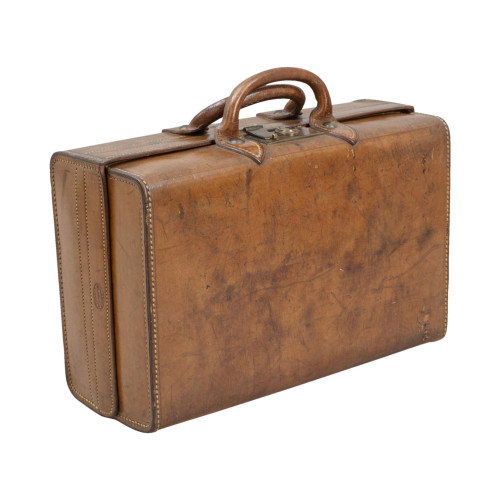
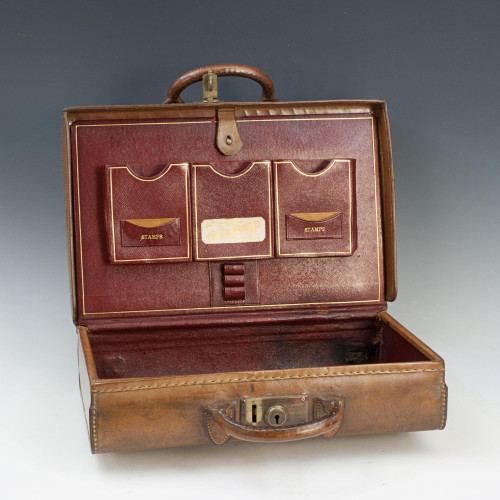
Like many leading luggage makers of the period, Insall produced a wide range of travel, sporting and business accessories. Their catalogue included portmanteaux, Gladstone bags, hunting and cricket bags, ladies' handbags, officers' kit bags, ball-dress baskets and the classic trunks. A portmanteau, in the traditional sense, is a leather travelling case that opens into two equal halves, allowing convenient access to its contents.
The company's reputation extended far beyond Bristol, attracting customers from across Britain and overseas. W. Insall & Sons continued trading into the early 20th century and was still listed at 19 St. Augustine's Parade in 1914. However, the dramatic changes in travel that followed ultimately contributed to the firm's decline. As rail, motor
W. Insall & Sons, Bristol, 19 & 20 St. Augustine's Parade, Bristol.
W. Insall & Sons was one of the most highly regarded luggage and trunk makers in the West Country during the Victorian and Edwardian periods. Based at 19 St. Augustine's Parade in Bristol, the firm earned an outstanding reputation for the quality and craftsmanship of its products, many of which featured exquisitely detailed hand-tooled leatherwork.
The business was founded in 1829 by George Insall. By 1865, the company had passed into the hands of William Insall, whose name became synonymous with the firm's growing success. As his sons later joined the business, the company adopted the name W. Insall & Sons. During the second half of the 19th century, the firm's expanding trade led to the acquisition of neighbouring premises at No. 20 St. Augustine's Parade.
Like many leading luggage makers of the period, Insall produced a wide range of travel, sporting and business accessories. Their catalogue included portmanteaux, Gladstone bags, hunting and cricket bags, ladies' handbags, officers' kit bags, ball-dress baskets and the classic trunks. A portmanteau, in the traditional sense, is a leather travelling case that opens into two equal halves, allowing convenient access to its contents.
The company's reputation extended far beyond Bristol, attracting customers from across Britain and overseas. W. Insall & Sons continued trading into the early 20th century and was still listed at 19 St. Augustine's Parade in 1914. However, the dramatic changes in travel that followed ultimately contributed to the firm's decline. As rail, motor
and later air travel became faster and more commonplace, the heavy leather cases and substantial wooden trunks that had once been essential for long-distance journeys gradually fell out of favour. It is believed that the business ceased trading sometime between the First and Second World Wars.
Bristol, as a major port city, was home to a number of luggage and trunk makers throughout the 19th century. Yet among them, the name Insall stands apart. Today, W. Insall & Sons is remembered as one of the finest makers of trunks and travel goods in the West Country, and its surviving pieces remain highly sought after by collectors for their quality, durability and elegant design.
1 ITEM
Please create wishlist to add this item to
