Tom Morris
1821 - 1908
Tom Morris - 'Old Tom', The Grand Old Man of Golf.
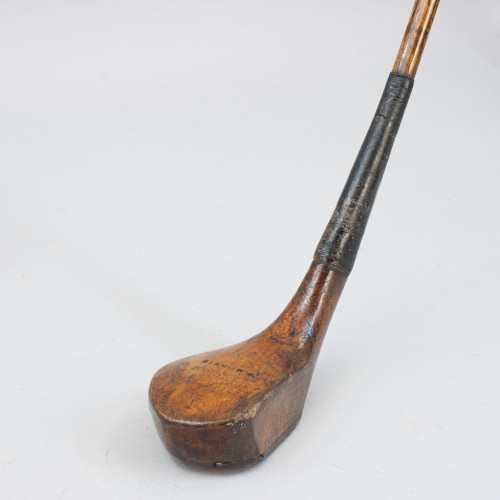
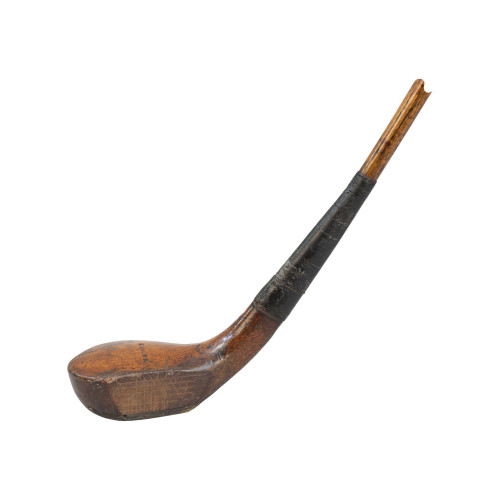
Tom Morris, affectionately known as 'Old Tom', was a 19th century pioneer of golf, and remains one of the most influential figures in the history of the game. A four-time Open Champion, he was far more than an outstanding golfer. Morris was also an accomplished clubmaker, innovative greenkeeper and visionary course designer whose ideas transformed golf and continue to shape the sport today.
Born in St Andrews, Scotland, in 1821, Tom developed a love of golf from an early age, working as a caddie before being apprenticed at just fourteen to Allan Robertson, widely regarded as the finest golfer of his generation. Under Robertson's guidance, Morris learned every aspect of the golf trade, from crafting featherie golf balls and hand-made clubs to mastering the finer points of the game itself. Robertson frequently selected Morris as his partner in challenge matches and, according to golfing legend, the pair were never defeated.
The partnership eventually came to an abrupt end with the arrival of the revolutionary gutta-percha, or 'gutty', golf ball. Unlike the expensive hand-crafted featherie, the gutty was cheaper to produce and far more durable. Robertson had built a thriving business manufacturing featherie balls and fiercely opposed the new technology. Legend has it that when he discovered Morris using the gutty, he dismissed him on the spot for endorsing what would ultimately become the future of golf.
In 1851, Morris accepted the position of Keeper of the Greens at the newly established Prestwick Golf
Tom Morris - 'Old Tom', The Grand Old Man of Golf.
Tom Morris, affectionately known as 'Old Tom', was a 19th century pioneer of golf, and remains one of the most influential figures in the history of the game. A four-time Open Champion, he was far more than an outstanding golfer. Morris was also an accomplished clubmaker, innovative greenkeeper and visionary course designer whose ideas transformed golf and continue to shape the sport today.
Born in St Andrews, Scotland, in 1821, Tom developed a love of golf from an early age, working as a caddie before being apprenticed at just fourteen to Allan Robertson, widely regarded as the finest golfer of his generation. Under Robertson's guidance, Morris learned every aspect of the golf trade, from crafting featherie golf balls and hand-made clubs to mastering the finer points of the game itself. Robertson frequently selected Morris as his partner in challenge matches and, according to golfing legend, the pair were never defeated.
The partnership eventually came to an abrupt end with the arrival of the revolutionary gutta-percha, or 'gutty', golf ball. Unlike the expensive hand-crafted featherie, the gutty was cheaper to produce and far more durable. Robertson had built a thriving business manufacturing featherie balls and fiercely opposed the new technology. Legend has it that when he discovered Morris using the gutty, he dismissed him on the spot for endorsing what would ultimately become the future of golf.
In 1851, Morris accepted the position of Keeper of the Greens at the newly established Prestwick Golf
Club, leaving St Andrews to begin a remarkable new chapter in his career. With Prestwick still in its infancy, he was responsible for designing and laying out the course while also giving golf lessons, organising competitions and running his own golf equipment business.
Morris played a pivotal role in the creation of The Open Championship, and when the inaugural tournament was held at Prestwick in 1860, he struck the very first shot in championship history. He finished runner-up that year before winning the Championship in 1861, 1862, 1864 and 1867, firmly establishing himself among golf's earliest great champions.
In 1865, Morris returned to St Andrews after being invited back by the Royal and Ancient Golf Club. Bringing with him the experience gained at Prestwick, he transformed the famous links through a series of groundbreaking innovations. He introduced separate teeing grounds for each hole, widened fairways, enlarged greens, constructed two entirely new greens and began actively managing bunkers and other hazards, which had previously been left largely to nature. These improvements spread play more evenly across the course, allowing St Andrews to accommodate the growing popularity of golf.
His influence extended beyond course design. Morris pioneered the practice of top-dressing greens with sand to improve their condition and became the first greenkeeper to use a push mower for cutting greens, setting new standards in course maintenance that are still recognised today.
Throughout his remarkable career, Morris advised on and helped design numerous courses across the British Isles, including Carnoustie, Prestwick, St Andrews, Muirfield and Westward Ho! Many of the principles he introduced became the blueprint for modern golf course architecture, including the now-standard 18-hole layout. St Andrews had originally comprised 22 holes, and the concept of routing each nine holes back towards the clubhouse.
Remarkably, Morris continued working almost until the end of his life. He died in 1908, just short of his eighty-seventh birthday, following a fall down the stairs at the St Andrews clubhouse, bringing a close too one of the most extraordinary careers in sporting history.
It is impossible to overstate Old Tom Morris's contribution to golf. As a champion player, master craftsman, pioneering greenkeeper and visionary course designer, he shaped virtually every aspect of the modern game. Without 'Old Tom' Morris, golf as we know it today might have been a very different game indeed.
11 ITEMS