
Archers Yew Wood Bow By James Buchanan
Archers Yew Wood Bow By James Buchanan
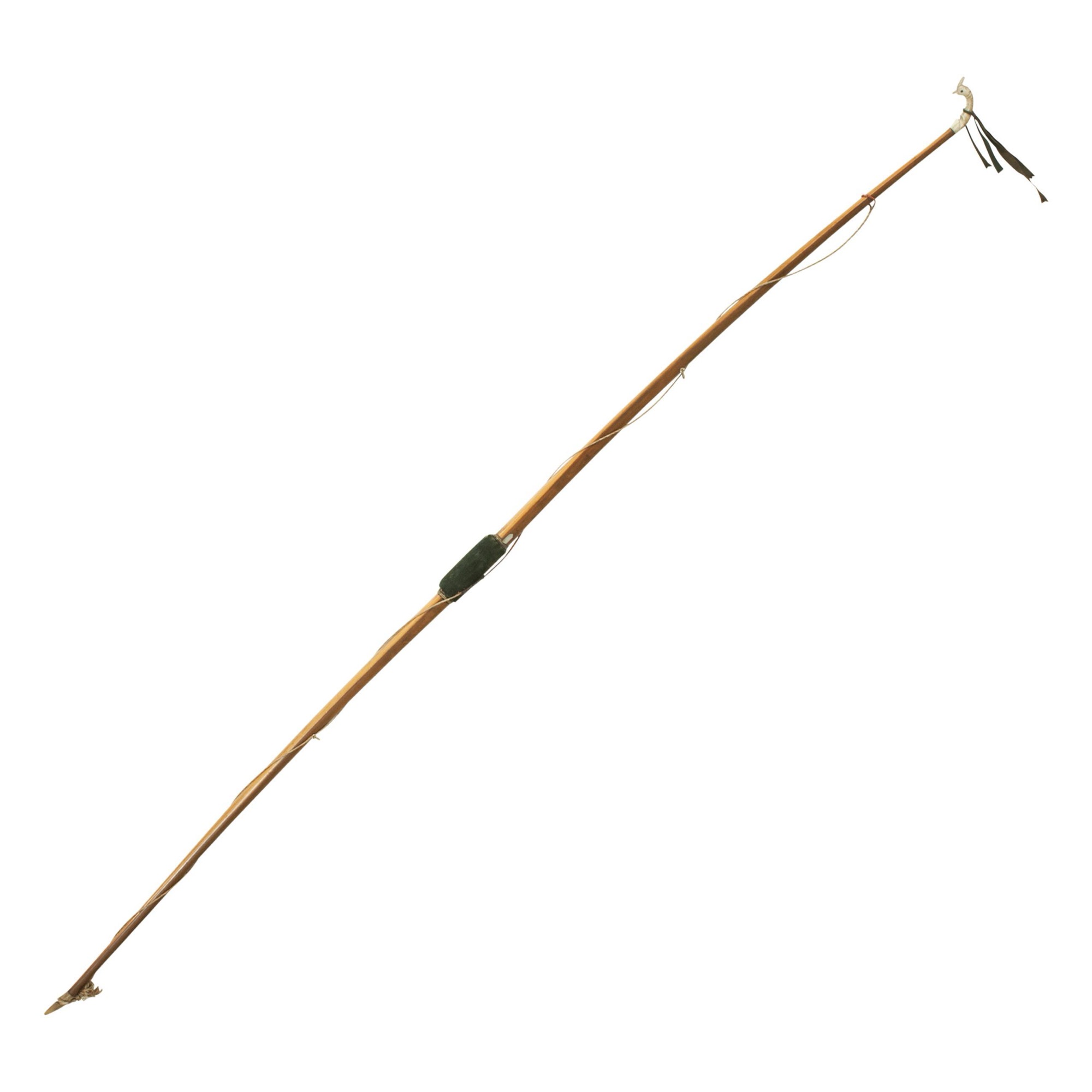
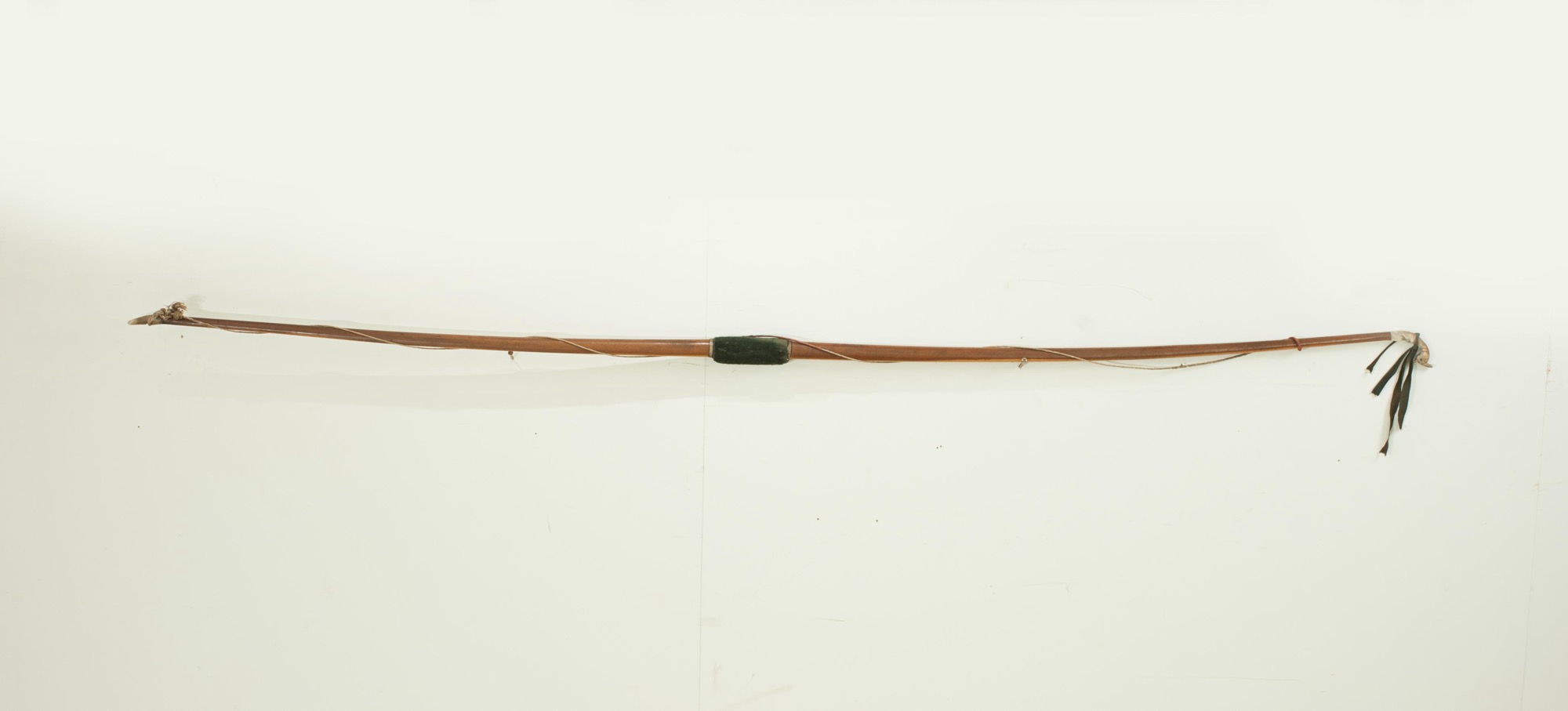
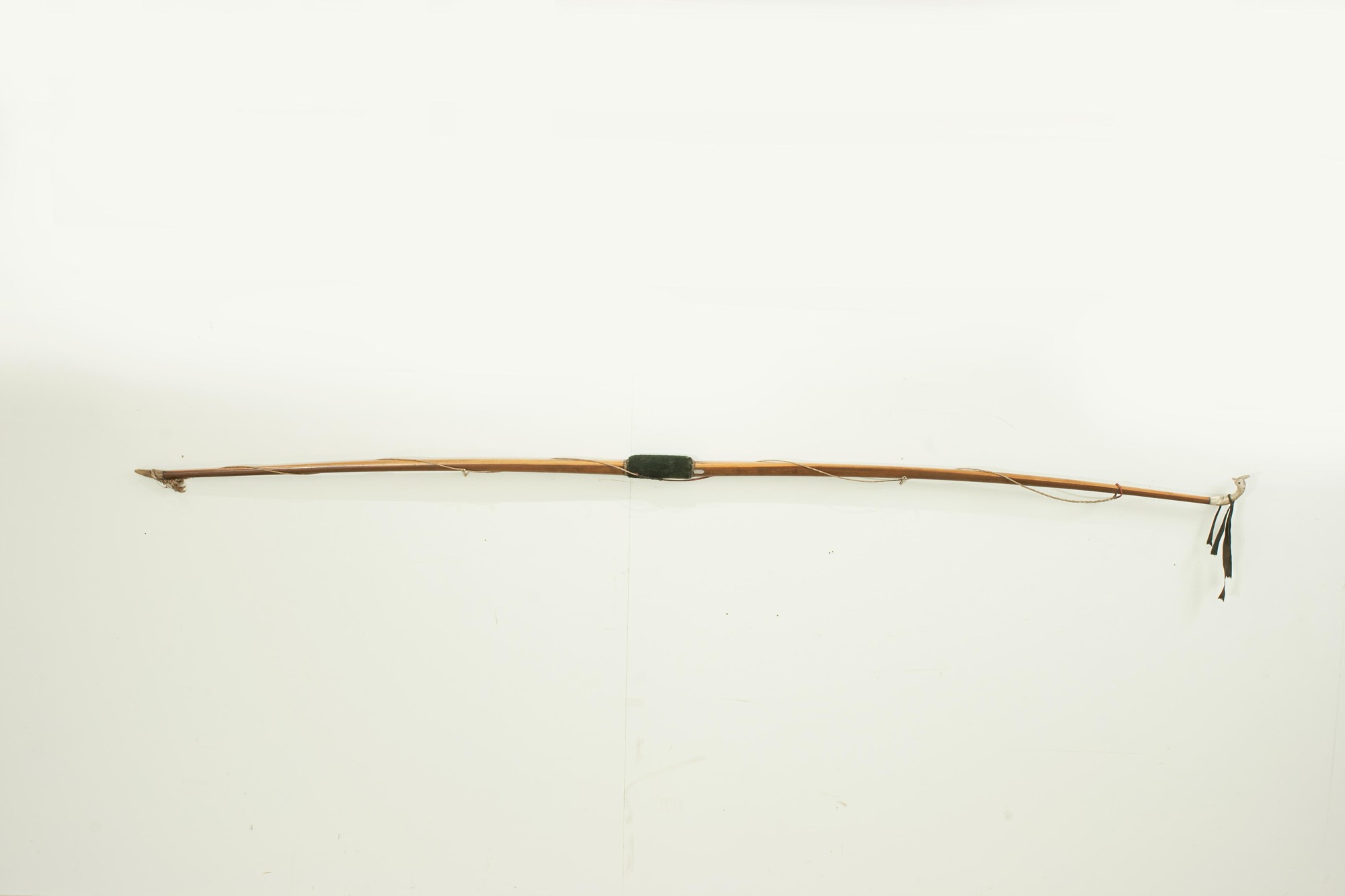
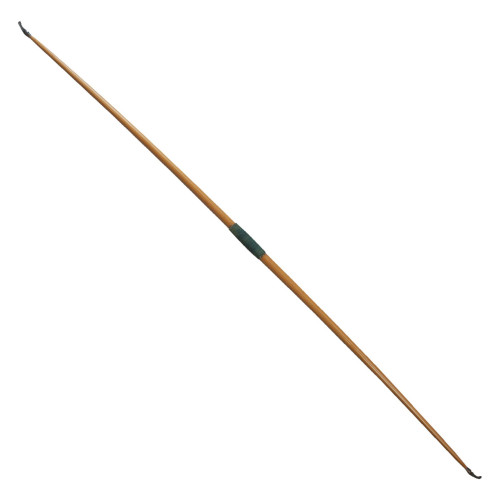
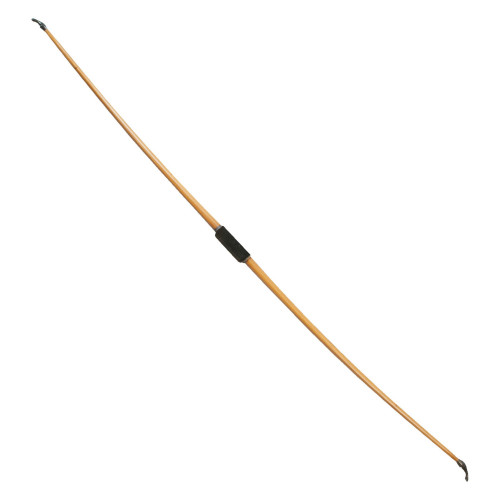
Vintage James Buchanan Yew Wood Longbow.
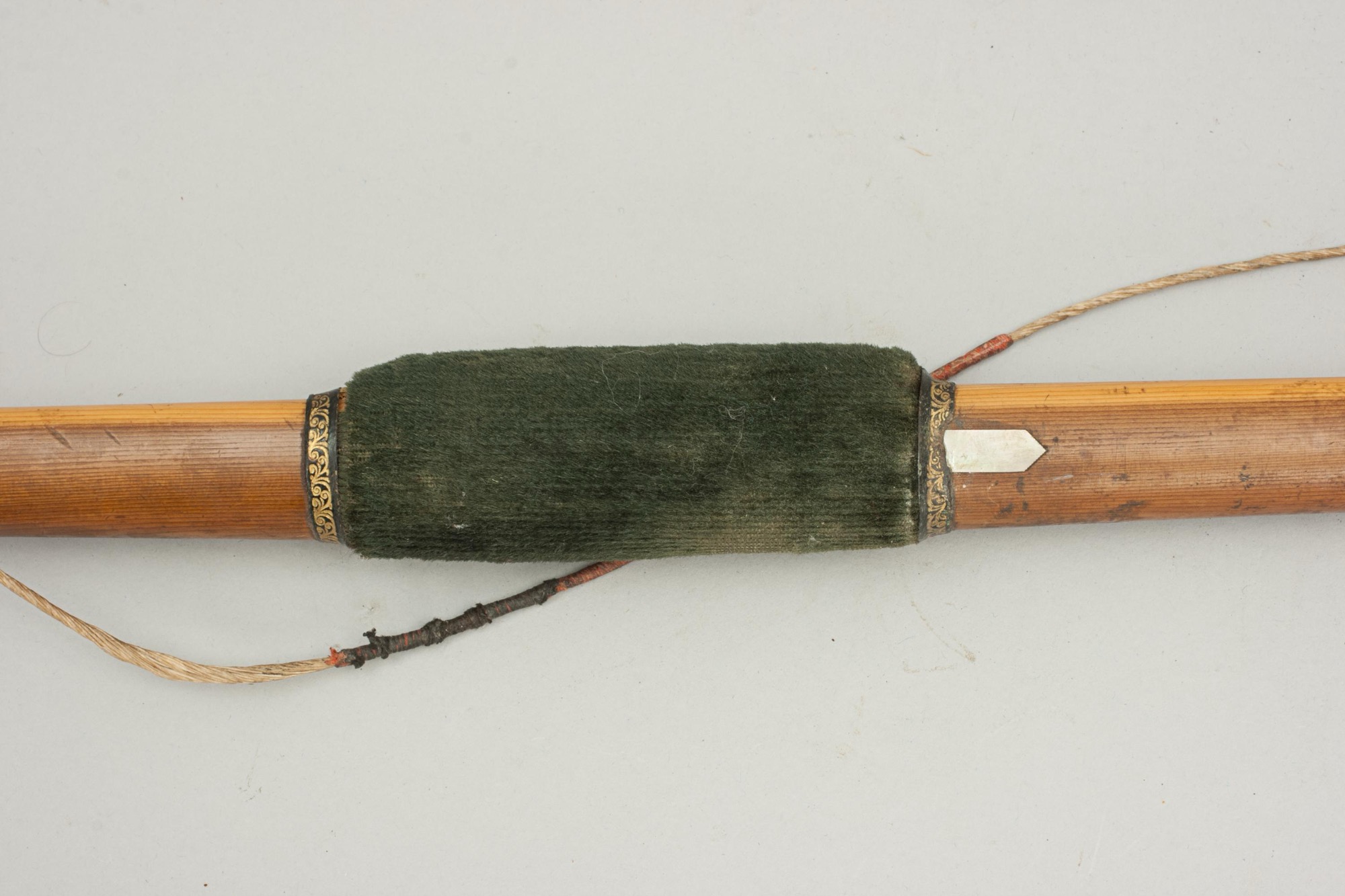
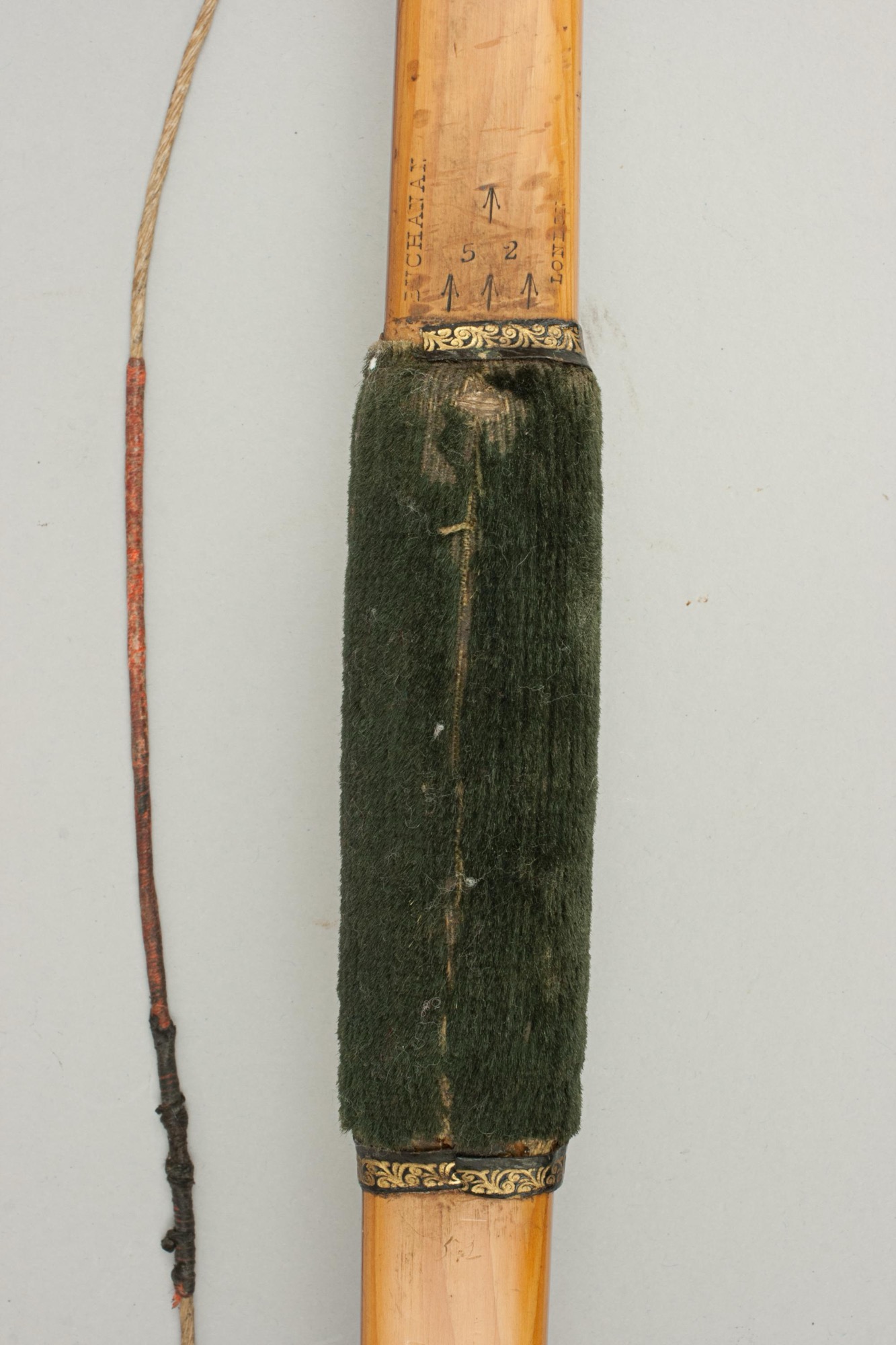
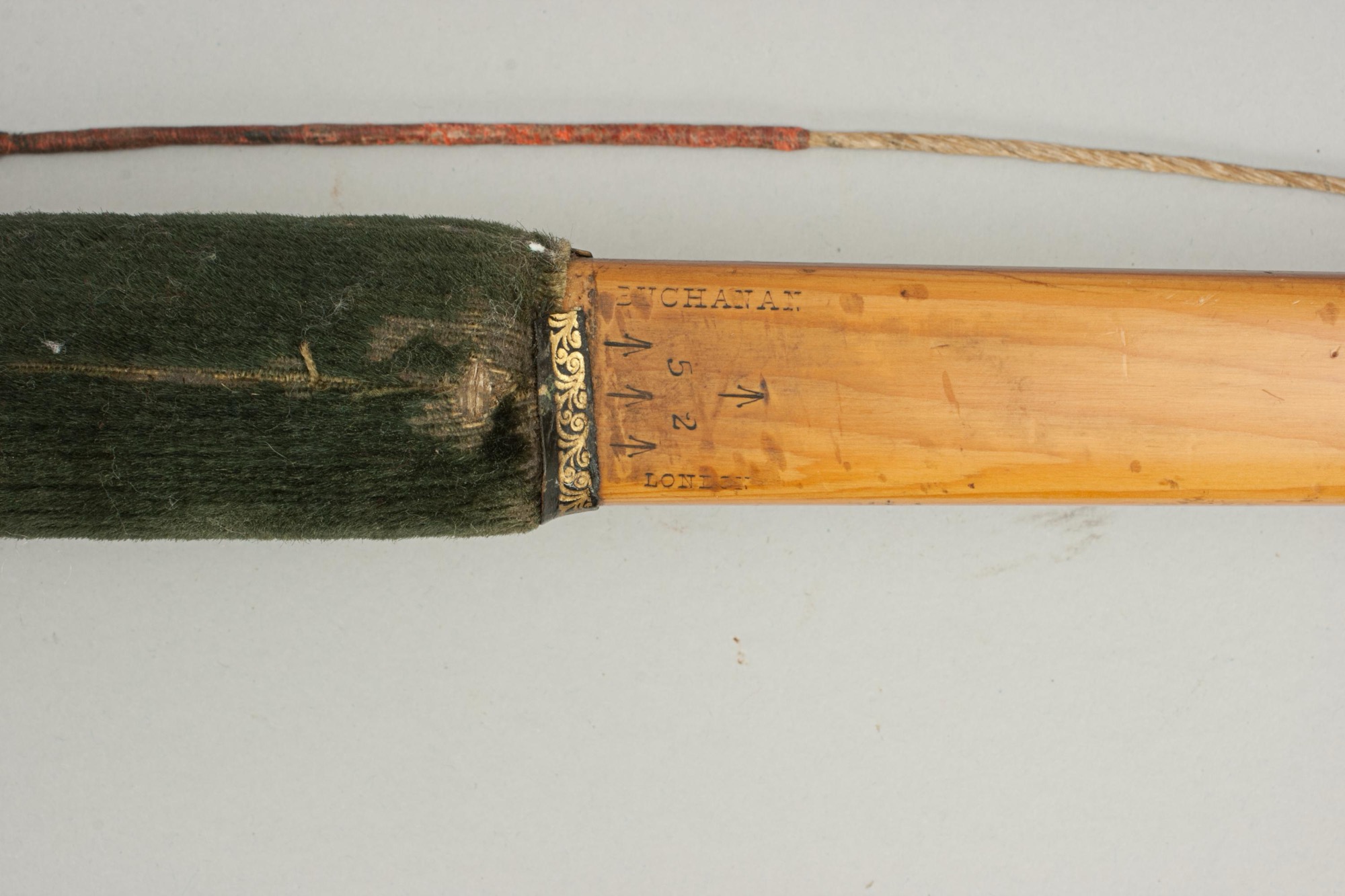
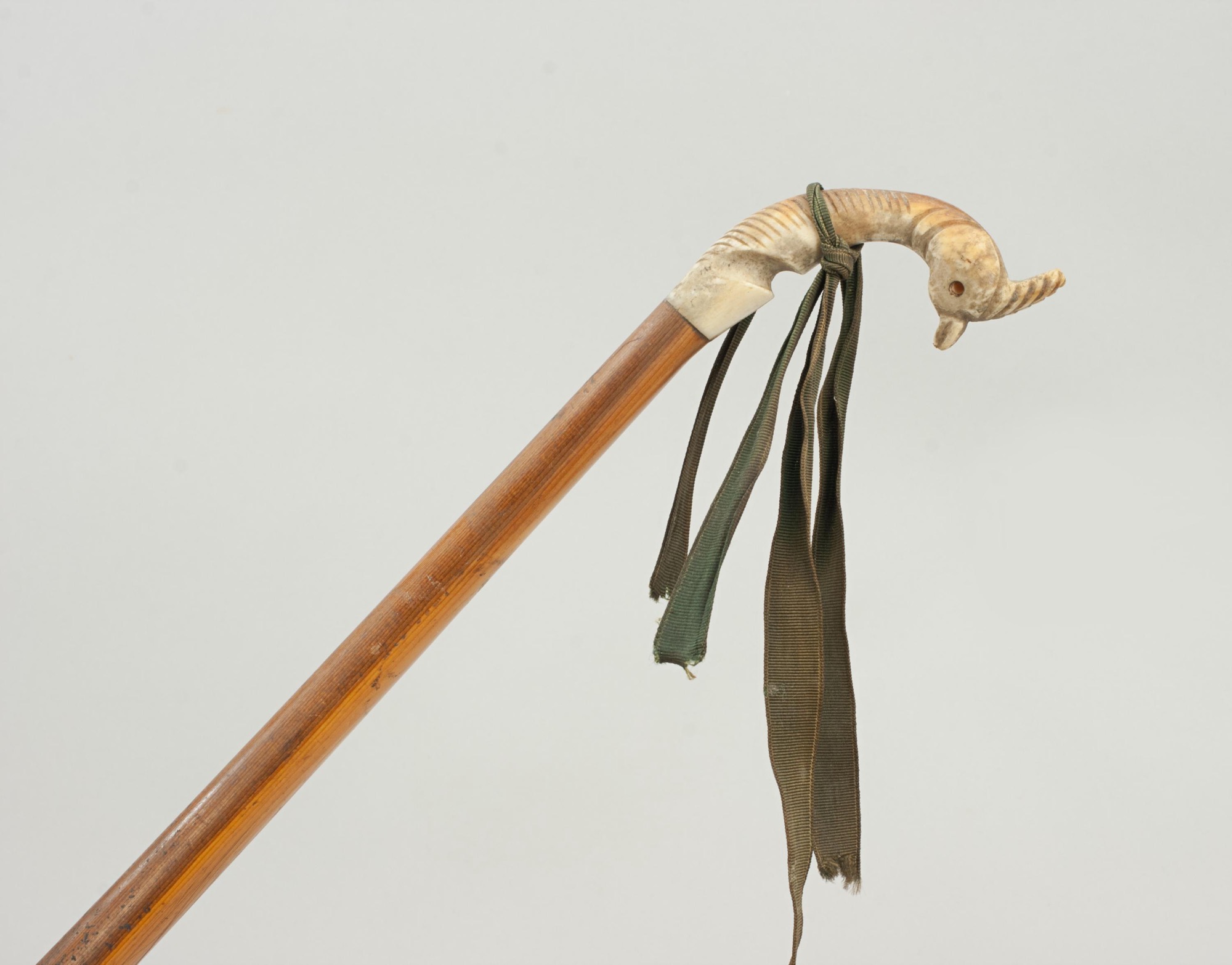
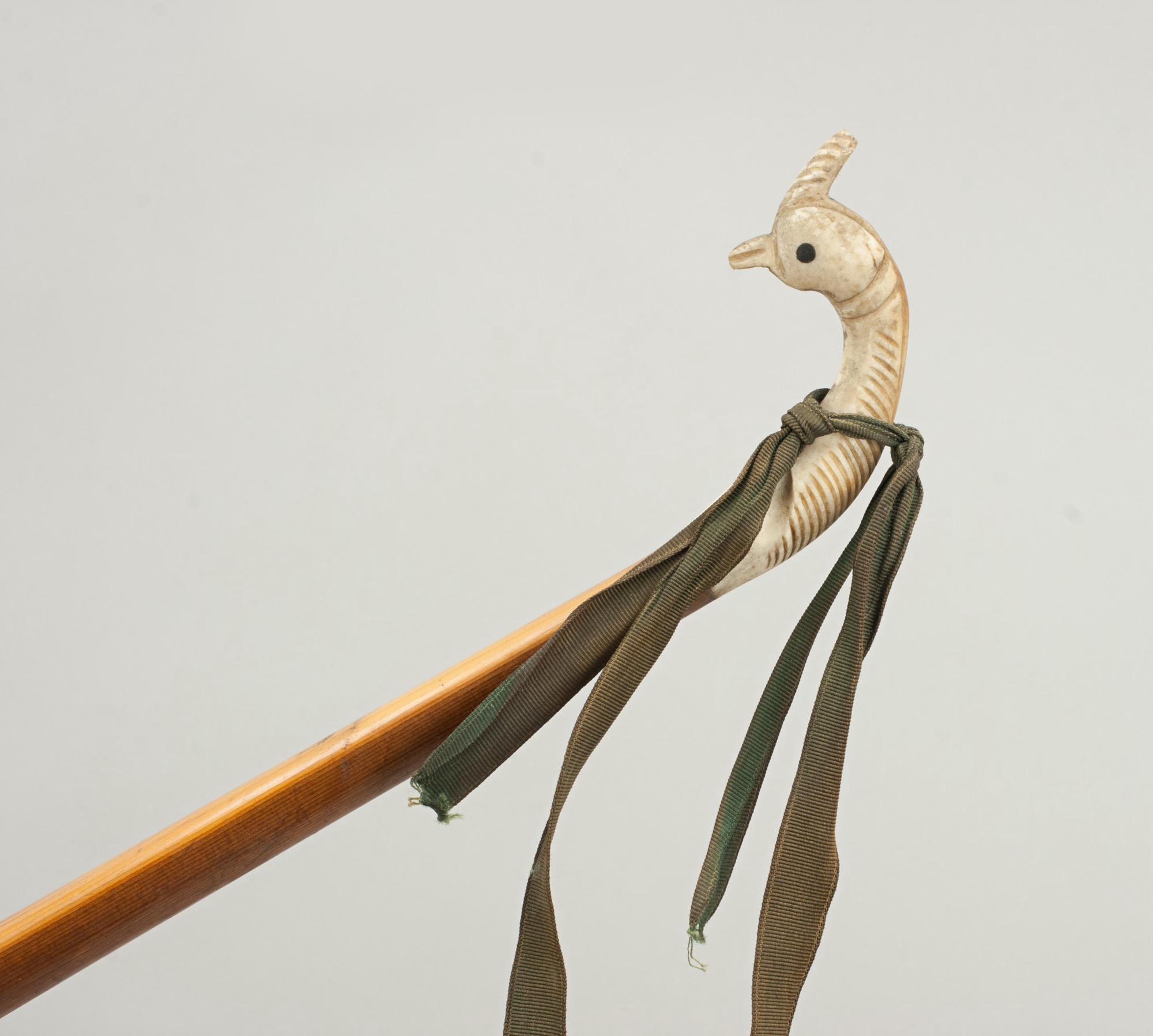
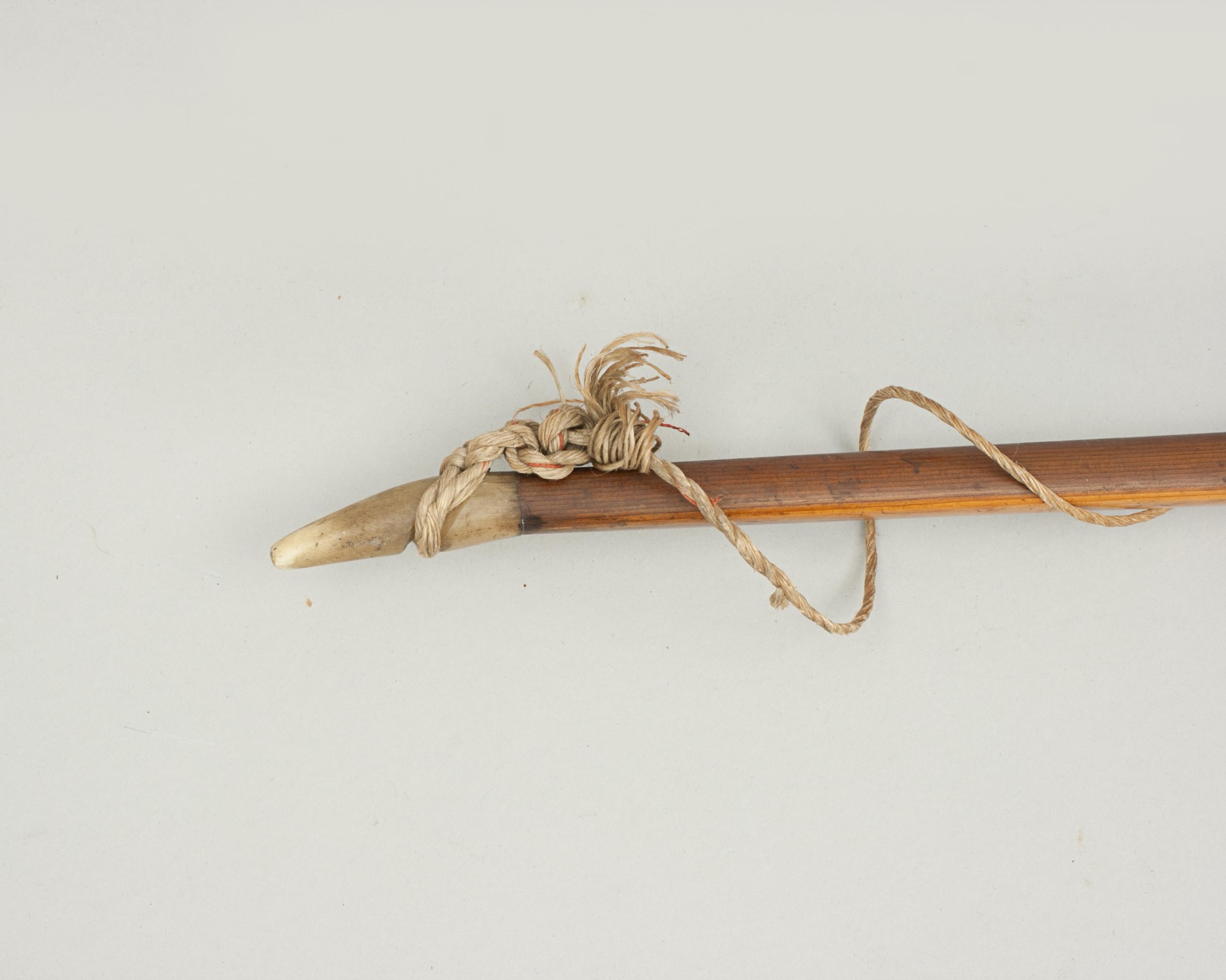
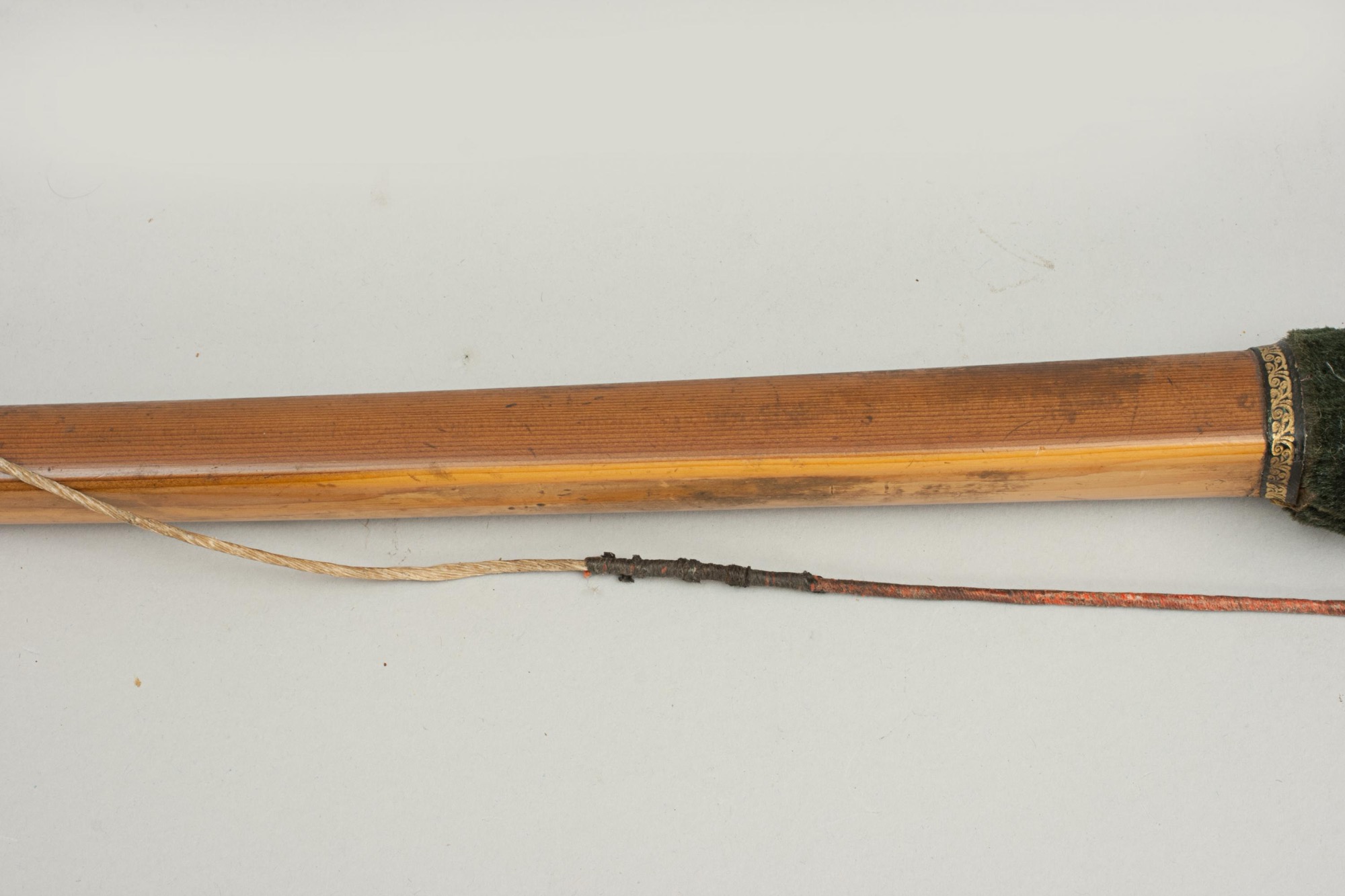
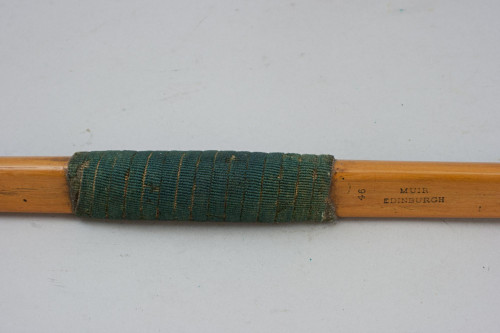
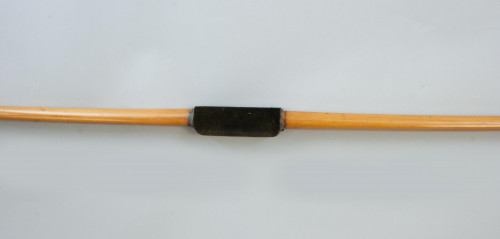
A fine self-bow made of yew wood by the renowned London bowyer James Buchanan of Piccadilly. This attractive example of a longbow is fitted with two distinctive nocks: one crafted from horn and the other a decorative bone nock carved in the form of a peacock's head. It features a mother-of-pearl arrow plate (also known as an arrow pass) and a green fabric-covered grip. Above the handle is the maker's inscription, "Buchanan, London", while below is the marking "52 with 4 arrows", indicating the bow's draw weight of 52 lbs. This is a well-preserved example in good original condition.
The bow's length is measured between the string grooves on the nocks.
Please note that, due to the bow's age and nature, its functionality cannot be guaranteed. If you choose to string or use it, you do so entirely at your own risk.
Archery, and the longbow in particular, forms an important part of England's heritage. Few legends are as enduring as that of Robin Hood, and the English longbow remains one of the most iconic bows ever made. Renowned for its role in securing English victories during the Medieval period, it has become a symbol of both military prowess and traditional craftsmanship. Given its remarkable history, it is no surprise that the humble longbow has enjoyed a revival and continues to hold an important place in modern archery.
The longbow rose to prominence during the late Medieval period through its effectiveness in warfare. As military demand increased, bowyers flocked to the City of London in search of work, driven by the growing need for high-quality bows. Its reputation was firmly established through famous victories at the Battles of Crécy (1346), Poitiers (1356), and Agincourt (1415), where the skill of English archers proved decisive. In 1363, archery practice was made compulsory for men, further strengthening the trade. To meet demand and maintain standards, a formal apprenticeship system was introduced, requiring aspiring bowyers to serve seven years before qualifying as craftsmen.
During the Victorian period (1837-1901), target archery flourished as a popular recreational pastime, reaching the height of its social appeal. This golden age gave rise to a number of highly accomplished bow makers. Alongside craftsmen who often produced umbrellas, fishing tackle, and other sporting goods, Thomas Waring, Thomas Aldred, James Buchanan, and Peter Muir earned particularly strong reputations for the quality, consistency, and scale of their work. While Waring, Aldred, and Buchanan supplied English clubs and societies, Peter Muir was especially respected throughout Scotland.
Dimensions:
1900-1949
C. 1880s
Yew wood
United Kingdom
James Buchanan
Good condition
RELATED ITEMS
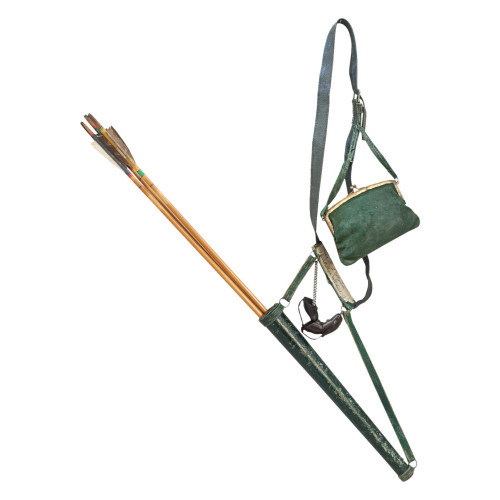
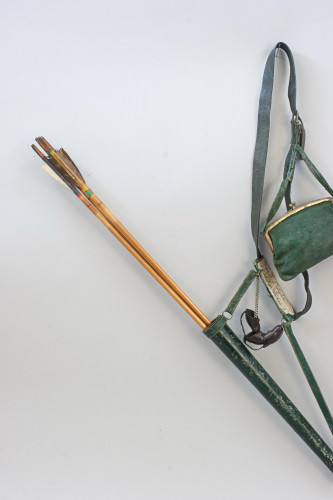





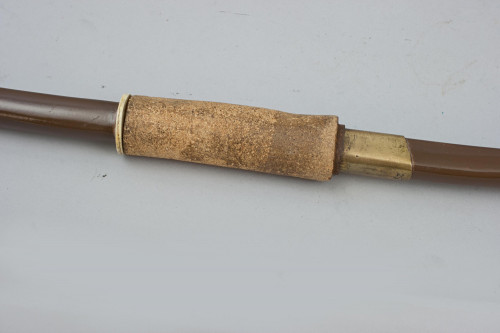

 and a green fabric-covered grip. Above the handle is the maker's inscription, "Buchanan, London", while below is the marking "52 with 4 arrows", indicating the bow's draw weight of 52 lbs. This is a well-preserved example in good original condition.The bow's length is measured between the string grooves on the nocks.Please note that, due to the bow's age and nature, its functionality cannot be guaranteed. If you choose to string or use it, you do so entirely at your own risk.Archery, and the longbow in particular, forms an important part of England's heritage. Few legends are as enduring as that of Robin Hood, and the English longbow remains one of the most iconic bows ever made. Renowned for its role in securing English victories during the Medieval period, it has become a symbol of both military prowess and traditional craftsmanship. Given its remarkable history, it is no surprise that the humble longbow has enjoyed a revival and continues to hold an important place in modern archery.The longbow rose to prominence during the late Medieval period through its effectiveness in warfare. As military demand increased, bowyers flocked to the City of London in search of work, driven by the growing need for high-quality bows. Its reputation was firmly established through famous victories at the Battles of Crécy (1346), Poitiers (1356), and Agincourt (1415), where the skill of English archers proved decisive. In 1363, archery practice was made compulsory for men, further strengthening the trade. To meet demand and maintain standards, a formal apprenticeship system was introduced, requiring aspiring bowyers to serve seven years before qualifying as craftsmen.During the Victorian period (1837-1901), target archery flourished as a popular recreational pastime, reaching the height of its social appeal. This golden age gave rise to a number of highly accomplished bow makers. Alongside craftsmen who often produced umbrellas, fishing tackle, and other sporting goods, Thomas Waring, Thomas Aldred, James Buchanan, and Peter Muir earned particularly strong reputations for the quality, consistency, and scale of their work. While Waring, Aldred, and Buchanan supplied English clubs and societies, Peter Muir was especially respected throughout Scotland.)